- Startup.Club Newsletter
- Posts
- 🚀 How to Scale a Business: The Ultimate 10x Growth Checklist
🚀 How to Scale a Business: The Ultimate 10x Growth Checklist
#21 The Monthly Startup Club Edge

IN THIS WEEK’S NEWSLETTER:
🚀 How to Scale a Business: The Ultimate 10x Growth Checklist
✅ Scaling in Zeros
💪 How to Keep Your Entrepreneurial Identity After Selling a Business
💡 AI Tip of the Month
🔥 The Shift Every Founder Must Make…
Listen to this newsletter👇
🚀 How to Scale a Business: The Ultimate 10x Growth Checklist
In Start. Scale. Exit. Repeat., we spent a lot of time identifying what actually works when scaling a business. In fact, it’s the largest section of the book.
Most companies fail to scale. It is not instinctive. I learned that the hard way.
It was not until I brought in a coach who helped implement dozens of changes that we began to scale.
You have made it through Start Mode. Now it is time to move into Scale Mode.
THE ULTIMATE SCALE CHECKLIST
1. Product Market Proof
☐ Customers are already paying, not just interested
☐ You have repeat purchases or retention
☐ Clear proof your product solves a real problem
☐ You can explain your value in one sentence
☐ Customers would be disappointed if you disappeared
Rule: Proof sells
2. Your X Factor
☐ You know exactly what makes your product or service different
☐ That difference matters to customers
☐ Competitors cannot easily copy it
☐ You are leaning hard into that advantage
☐ You have created a Nearly Unbearable Brand Promise
3. Scale in Zeros
☐ You have visualized what 10x looks like in your organization
☐ You have proven you can go from 100 to 1,000 to 10,000 and beyond
☐ Your unit economics work
☐ Your process works without you
☐ You are planning for 10x operational demand
4. Promotion Engine
☐ You have a repeatable acquisition channel
☐ You know your cost of acquisition
☐ You know your long term customer value
☐ You are doubling down on what works
☐ You are building brand and trust
5. Distribution Channel
☐ You have chosen a primary channel
☐ You are dominating one channel before adding others
☐ You are building leverage through email, audience, and partners
☐ Competitors cannot easily steal your traffic
6. People
☐ You have hired leaders, not just doers
☐ You have delegated responsibilities, not just tasks
☐ Sales, marketing, IT, and operations are owned by leaders
☐ You remove low performers quickly
☐ You are building a sales driven culture
☐ You have identified the roles and ideal profiles needed for 10x growth
7. Money
☐ You track cash weekly
☐ You know your burn rate
☐ You are not over scaling your cash position
☐ You raise the right type of capital strategically
☐ You have perfected your pitch
☐ You continuously improve efficiency and reduce costs
☐ You use customer revenue to help fuel growth
8. Systems
☐ Standard operating procedures are documented
☐ You run quarterly planning sessions, weekly meetings, and daily sales huddles
☐ KPI dashboards are in place
☐ Bottlenecks are identified and removed
☐ You have a coach to provide accountability
☐ You have defined 3 year, 1 year, and quarterly winning moves
☐ You have clear company goals at each level
☐ Individual goal setting is in place
☐ You have a sales playbook
☐ The business can scale without you
☐ You use profiling for hiring
9. Culture
☐ You have defined personal core values and value statements
☐ You have defined company core values
☐ You give credit instead of taking it
☐ You scale winners quickly and eliminate losers fast
☐ You enforce accountability and performance
10. Use AI to Scale
☐ You have created an AI first mindset across the company
☐ You provide AI tools like ChatGPT or Claude to your team
☐ You use AI for lead generation
☐ You integrate AI into marketing and sales
☐ You use AI agents to improve operations
☐ You automate customer service with AI
☐ You use AI to amplify human created content
☐ You use AI to manage data and improve decisions
This list may feel overwhelming. Try not to implement everything in a single planning session.
It took us seven years to figure out our X factor at our public company. After revenue stalled and we hired a coach, we implemented a few items each quarter. Within three months, we saw meaningful change. Within a year, we built strong momentum. Within three years, we nearly tripled revenue and sold to a Fortune 500 company for 17 times EBITDA.
FEELING OVERWHELMED?

Do not panic!!!
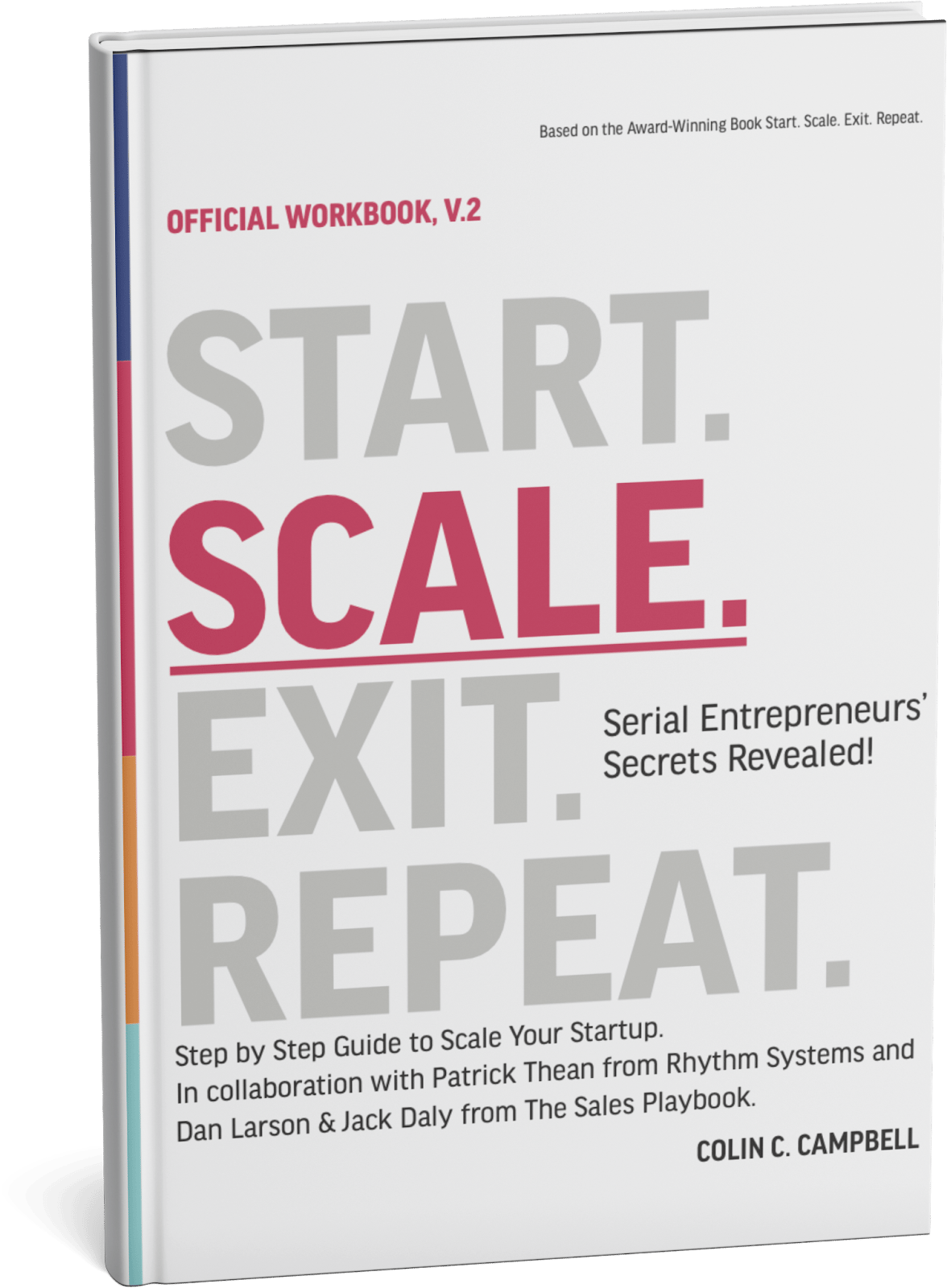
We published the official Scale Workbook to go deeper on these concepts. We went totally old school…pen and paper. And we also AI custom GPTs throughout to help manage many of these steps by scanning QR codes.
We want to help companies scale.
That is why we created the workbook.
If you have not already done so, read the Scale section in Start. Scale. Exit. Repeat. Also read Rhythm Systems by Patrick Thean and The Sales Playbook by Dan Larson and Jack Daly.
Once you complete this checklist, it is time to think about Exit Mode.
— Colin C. Campbell
Disclaimer: Startup Club and its AI resources are for informational purposes only and do not constitute legal advice. Consult a qualified lawyer for legal matters.
📅 This Month’s Clubhouse Schedule!

🎙️ Building and Rebuilding as a Serial Entrepreneur with Steve Simonson - April 17th, 2pm Eastern
What does it actually take to build multiple businesses over time? Steve Simonson of Catalyst88 shares lessons from operating across industries, what carries over from one venture to the next, and where founders get it wrong when starting again.
🎙️ Why Businesses Get Stuck with Rod Khleif - April 24th, 2pm Eastern
Most founders don’t fail, they stall. This session unpacks the mindset, leadership gaps, and blind spots that keep businesses from moving forward, and what it actually takes to break through.
🎙️ Strategic Entrepreneurship with Matt Kuttler - May 1st, 2pm Eastern
Not all growth is good growth. Matt Kuttler dives into how founders should think about strategy, decision-making, and positioning, and how to build with intention instead of reacting to every opportunity.
✅ Scaling in Zeros: The 10x Growth Formula for Entrepreneurs

Everyone seems to be talking about "10x-ing" their business.
But there's a problem with how entrepreneurs use the expression, they don't mean it literally.
The concept of scaling in zeros forces you to both visualize and plan for what it would look like to:
Go from 10 customers to 100
Go from $10K months to $100K months
Go from 100 locations to 1,000
This mindset reframes scaling as truly exponential.
And that formula is to Think, Plan, and Act in Zeros.
Think in zeros
One of the biggest problems entrepreneurs face is a failure to shift their mindset. If you're flatlining, it's because you're doing the same old things with the same old people, the same old way. Thinking in zeros means thinking ahead to where you want to be.
Plan in zeros
Scaling doesn't just come by accident. It comes through structured planning, setting goals, and hiring the right people. Without a plan built around where you're going, your mindset stays just that: a mindset.
Act in zeros
From mindset, you build a plan. From a plan, you take action. Too many entrepreneurs say they want 10x, but their thoughts, plans, and actions are misaligned. The ones who scale close that gap, deliberately and boldly.
Ask yourself:
Who do I want to serve next? What market do I need to break into? Visualize your company 10 times its size… How does your story change, who do you need to hire, and how much will it take to get there?
Without specificity, you'll never add zeros.
👉 Read the full article here for all five shifts every founder needs to make
💡 AI Tip of the Month
If you're still typing everything out, you're leaving time on the table…

Wispr Flow is a voice dictation tool that works across every app on your computer, turning your spoken words into clean, polished text in real time. It's up to 4x faster than typing, and unlike basic dictation tools, it automatically removes filler words, fixes rambling thoughts, and adjusts its tone depending on which app you're using.
Drafting a formal email? It sounds professional.
Dropping a message in Slack? It sounds like you.
Flow learns your personal dictionary including names, industry terms, brand language and lets you create voice snippets for the things you say over and over.
Say "Colin's LinkedIn" and it instantly drops in the full profile URL.
Say "calendar link" and your Calendly address appears.
No typing, no copy-pasting, no interrupting your train of thought.
It also works across 100+ languages, automatically detecting whichever one you're speaking. If you spend any meaningful part of your day writing, this is the tool that quietly gives you hours back.
💪 How to Keep Your Entrepreneurial Identity After Selling a Business
You sell your startup, the check clears and suddenly you don't know who you are anymore. That's the silent crisis many entrepreneurs face after an exit.
We imagine life after the sale as a hammock on the beach, but the high fades fast.
The structure disappears.
The identity vanishes.
Your business wasn't just what you did, it was who you were.

The truth?
Exiting a business is a launch pad.
The myth of the finish line
Selling a company is less like crossing a finish line and more like taking a pit stop. rest, refuel and get back on the track stronger. As researchers at the Yale School of Management note, entrepreneurs "imprint their DNA on their enterprises in a very personal way" and despite being incredibly fortunate, the post-exit founder can find their new life confusing and filled with angst.
Entrepreneurs are built to build
The most dangerous thing after selling is doing nothing. The mind of a true entrepreneur doesn't stop generating ideas. It's wired to spot pain points, inefficiencies and hidden opportunities. Some of the best ideas come from being in the trenches.
Start your next venture before you sell
If you're preparing for an exit, start thinking about what's next before the deal closes. It doesn't have to be fully formed, maybe it's a side project, maybe an advisory role. Staying in a creation mindset prevents the identity crash that so many entrepreneurs experience post-sale.
🔥 The Shift Every Founder Must Make to Achieve Exponential Growth
Here's the uncomfortable truth most entrepreneurs avoid: what got your business off the ground will not scale it.

Yet founders routinely try to grow by repeating the very behaviors that helped them survive the early days, instinct, hustle and heroic effort.
In "start mode," those traits are assets. In "scale mode," they quietly become liabilities.
When instinct stops working
In 2006, running a publicly traded technology company with more than 600 employees, things started to break. Revenue flatlined. Departments turned on each other. The stock price fell below the IPO. Then a board member asked if stepping aside for a "professional CEO" was on the table.
That's a very different conversation when you built the company from nothing.
The answer wasn't a shortcut. It was a full commitment. two days of strategic planning, an 88-day execution rhythm, annual and three-year goals, quarterly priorities, clear accountability, stronger hiring, defined core values and daily huddles.
Within three months, the company felt different. Within a year, growth returned. Within three years, the business had nearly tripled — and ultimately sold to a Fortune 500 buyer at a 17x EBITDA multiple and a 130% premium over the prior day's closing stock price.
Find your X-factor
For years, breaking into the U.S. market was a slow grind until a crisis forced clarity. On the verge of losing a multimillion-dollar contract, one bold move changed everything: a 100% migration guarantee. If a single website or email were lost, they would compensate at fair market value.
The company rebuilt around one capability, becoming the best migration team in the world. They won the contract. Then came Vodafone, British Telecom, Bell Canada, AT&T and dozens more. Once you identify your X-factor, momentum compounds. Clarity creates momentum. Momentum creates scale.
It's not about you anymore
The biggest constraint in most companies isn't capital. It's the founder. In "start mode," you delegate tasks. In "scale mode," you delegate outcomes.
If you want to add three zeros to your revenue, hire people who have already operated at 10x your current scale. It won't feel natural. Most entrepreneurs are wired to jump in and fix things. But scale demands restraint.
The founder's job isn't just to raise money. It's to choose the right money.
It's time to start leading a company built to scale.
Startup Club Quick Reads
A practical framework for scaling with intention, not chaos. This article introduces structured growth systems like EOS and shows how purpose, alignment, and execution drive sustainable scale.
A deeper look at what repeat founders do differently. It connects the dots between systems, people, and strategy, showing how scaling becomes repeatable when the right patterns are in place.
A clear breakdown of why so many founders get stuck after launch and what it actually takes to transition into a scalable business. This sets the foundation for understanding the shift from building to growing.
Scaling is not just strategy, it is a mindset shift. This piece explains how founders need to evolve from doing everything themselves to building systems, teams, and structure that can grow without them.
Startup Club Podcasts
Scaling requires thinking in systems, not tasks. Founders who solve everything manually become the bottleneck.
Operating rhythms (weekly, monthly, quarterly) beat reactive decision-making.
Growth without alignment wastes energy. Clarity drives scale.
EP140: From Startup to Scale Up
Delegation defines your ceiling. If you can’t let go, you can’t grow.
Lack of repeatable systems kills most companies.
Leverage beats labor. Output per person matters most.
Proven frameworks outperform reinventing the wheel.
Distance creates clarity. You can’t scale what you’re buried in.

Don’t forget to share out this newsletter to get rewards!
🚀 Time to Sell Index (TTSI) Update Pulls Back in 2026 to 16.8.
The Time to Sell Index (TTSI) rose to 26.8 in 2025, driven by a strong rebound in IPO activity, with 347 public listings. This represents a 125% increase from the lows of 2022 and a 54% increase year-over-year.
This confirms what many founders are beginning to feel: market sentiment is improving and liquidity is returning to the ecosystem.
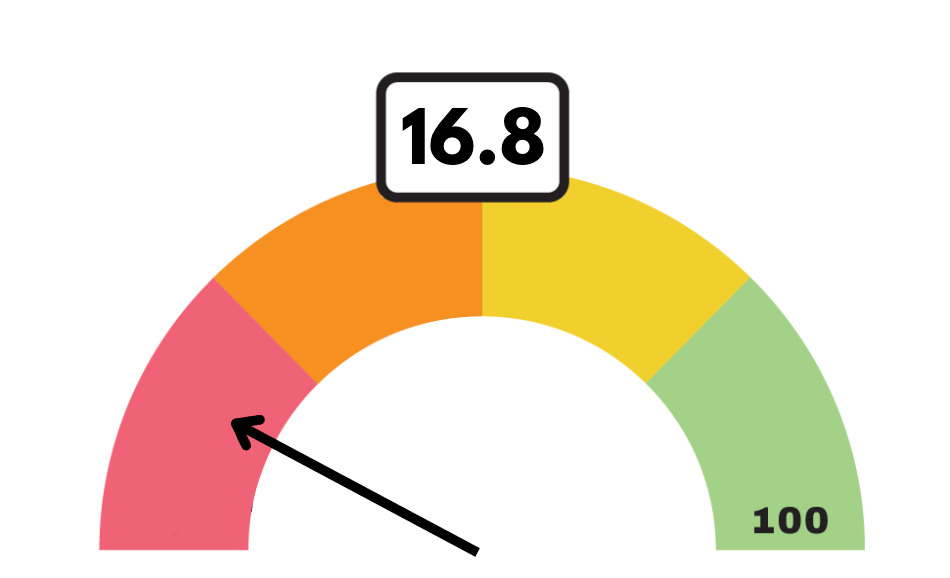
However, we are still firmly in a buyer’s market.
Looking ahead to 2026, based on the current IPO pipeline of approximately 190 companies, a more normalized estimate of around 275 public listings suggests the TTSI could settle near 16.8. This reflects a market that is stabilizing after a rebound rather than accelerating into a full seller’s market.
What This Means
From my own experience, timing is not theoretical. It has a direct impact on outcomes. I have seen firsthand how the difference between selling at the right moment and the wrong one can be substantial.
The exit environment is meaningfully better than the lows of 2022–2023, but still far from peak conditions. Higher interest rates for longer and ongoing global uncertainty are likely impacting IPO activity in the short term. Timing can still account for more than 50% of company value.
What I’m Watching Closely
I am watching the next wave of AI-driven IPOs very closely.
If companies like OpenAI, Anthropic (Claude), and SpaceX (including Grok) come to market, they could materially shift sentiment and accelerate the recovery. These are not just additional listings. They have the potential to reset expectations across the broader market. However, higher interest rates for longer, combined with global uncertainty, may be slowing the IPO market down in the short term.
Bottom Line
The market is recovering, not roaring.
We have clearly moved off the bottom, but we are not at a peak. If you have the flexibility, this remains a time to build, strengthen your position, and be patient. The real opportunity comes when the market transitions into a true seller’s environment, and we are not there yet.
🔥 Check Me Out on TikTok!
@startupclubhq Scaling isn’t luck — it’s momentum, and nobody knows that better than Joe Foster, founder of Reebok. Some entrepreneurs dream of one cozy ... See more
🚀 How to Support Startup Club
You can further support StartUp.Club by:
Sharing it with a friend or fellow entrepreneur! We’ve got a great referral program!
Responding to this email and letting me know what you think.
Picking up your copy of Start. Scale. Exit. Repeat.
And if you made it this far, thank you for reading.
— Colin C. Campbell
Entrepreneur Fact of the Month: Founders who start more than one company are more likely to succeed.
Data shows second-time founders outperform first-timers because they move faster and avoid predictable mistakes.